

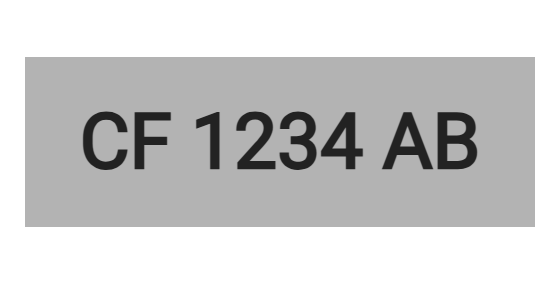
Most pleasure craft operating in Canadian waters are required to have a Canadian Licence Number. These numbers serves as a visual marker, connecting the boat to its registered owner and ensuring accountability on lakes, rivers and coasts. Boat owners must grasp licence numbers beyond mere compliance. In addition, it is about safe, traceable and responsible boating.
In Canada, vessel registration is made easy for owners, but many fail to show their numbers correctly. If a size is incorrect, if it is not visible or it is damaged the subject signage may experience enforcement issues. Canadian Licence Numbers are easily read and are durable ensuring there is no confusion during inspections or emergencies.
Licence numbers help search and rescue teams, not just law. When authorities quickly identify a vessel, response times improve. All boaters are responsible for displaying all signs properly.
This article discusses what Canadian Licence Numbers are, why they are important, how they compare to other identifiers, and how to select the best one for the long run.
What Are Canadian Licence Numbers and Their Importance?
Pleasure craft owners receive a unique Canadian Licence Number. A vessel’s link to its official records and the mark is unique and stays with the boat.
The bow must bear these numbers prominently on both sides. Seeing the object from farofa and in all weather conditions. The right display will allow enforcement officers and other mariners to quickly identify the vessel.
Beyond Regulation, Canadian Licence Numbers Are Important. They help verify ownership in the case of transfers or disputes. In emergencies, responders use visible identifiers to assess a vessel.
| Identifier | Type | Purpose | Permanence | Visibility | Requirement |
|---|---|---|---|---|---|
| Canadian Licence Numbers | Legal identification | Permanent | High | High | Required |
| Vessel Name | Personal identification | Changeable | Moderate | Moderate | Optional |
| Registration Decals | Proof of validity | Renewable | Low | Low | Required |
| Marina Slip Numbers | Location reference | Temporary | Limited | Limited | Optional |
How about a design size and material?
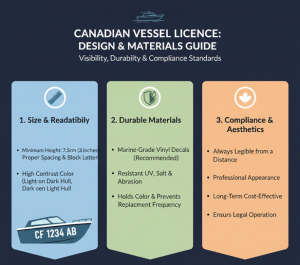
The Canadian licence numbers must be presented in an appropriate manner for compliance and durability purposes. Choices of design and material impact visibility and lifespan.
Standards on Size and Readability
License numbers should have minimum heights and spacing. The size of the characters must be big enough to read from a distance. Easier to read numbers when clearer.
You require opposing hues. Hulls with dark colors require light-colored numbers; light-colored hulls require dark-colored numbers. The contrast makes text readable in bright sunlight and in darkness.
Materials That Can Withstand Ocean Conditions
Marine habitats are cruel. Low quality markings can fade due to sun, water, and abrasion. Vinyl decals are durable because they will not fade or peel.
High-quality materials preserve a sharp edge and color. It helps to reduce frequent replacement and continuous compliance.
A Canadian Licence Numbers decal is functional as well as aesthetic.
A Study on Display Techniques & Effectiveness
There are many Canadian Licence Numbers display methods, but not all are equally effective. The method adopted influences the durability and confidence in compliance.
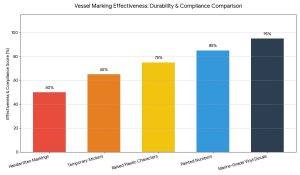
- Marine Grade Vinyl Decals are the highest-rated at 95% in stability against UV rays, salt water and fuel. Registration numbers will remain visible for years.
- The 85% painted numbers are effective and they have been used for a long time. But, they take more skill to apply correctly and tend to fade or chip more than vinyl.
- Handwritten markings (50%) and temporary stickers (65%) involve a major compliance vulnerability as these proofs are often considered non-compliant by the enforcement officers as they are not a permanent fixation and not readable per law.
Advice and tips for choosing a licence number
Ordering a decal is not all about choosing the right Canadian Licence Numbers.
The placing, preparing and maintaining matters
- Things to bear in mind.
- Proper spacing and height of characters
- Selection of high contrast colors.
- Adhesive or Paint – Marine Recommended.
- Sleek application surface.
Thoroughly clean the hull before use. Dirt and wax can lower adhesion. When aligned correctly, it looks professional and doesn’t require rework.
Here is a second set of practical tips to maintain
- Check numbers frequently for damage.
- Swiftly replace decals that are faded or defective.
- Do not use anything harsh against numbers.
- Make sure both sides are alike.
A clear identification helps one to go boating safety
Canadian Licence Numbers are a simple yet vital part of responsible boating. They link commercial craft with official documentation; bolster law enforcement; and promote safe boating. When a flag is flown according to the regulations it shows respect for the rules and fellow mariners.
When boat owners learn about the design standards, materials options, and placement rules, they can avoid them. Vessel Placards Use numbers that remain visible even after inclement weather situations; good for inspections and emergency situations.
Ultimately, Canadian Licence Numbers are much more than symbols. Everyone benefits from a system that organizes and makes Canadian waterways safer.
