
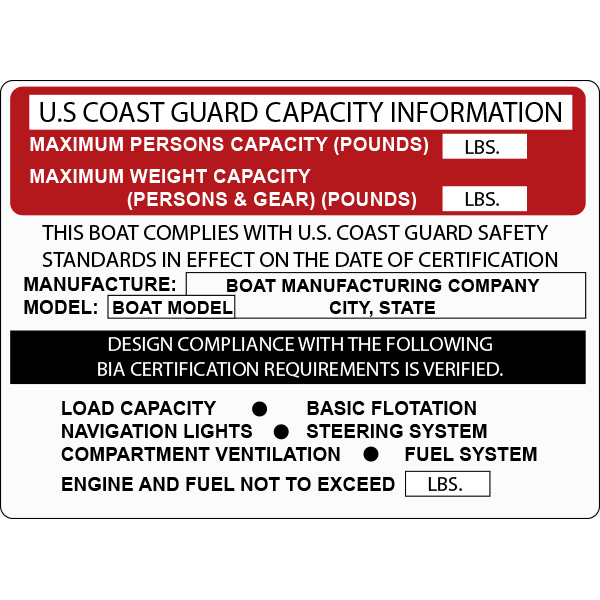
A placard prescribed by a campus’s vessel regulation require a freight sign featuring or more or sign comal. It transmits important information on the waste-handling capacities and pollution prevention responsibilities as prescribed by international maritime law. The sign really connects to making the planet better and being upfront onboard.
Vessel operators must ensure proper displaying capacity of sewage garbage oil residue systems. This information will help crew members discharge cargo correctly and avoid accidental violation. Signages are also checked by authorities during inspections to ensure compliance.
In recent years, enforcement of environmental laws has been tightened. Consequently, vessel owners need to grasp the significance of a Capacities Marpol Sign as well as its importance. Signs that are incorrect or missing can lead to fines, detention and a failed inspection.
In this guide we explain what the Capacities Marpol Sign is for, what information it must have, how it differs from other vessel placards and how to select the correct sign. The intent of this document is to provide clarity and confidence to owners, operators and managers.
The Capacities Marpol Sign and Its Importance Explained
A Marpol Sign is used for accomplishing the capacity requirements against pollution. The maximum capacities of onboard waste facilities are clearly set out, including the sewage holding tank and garbage storage.
The sign has no decoration. This is a working reference for crew members that operate waste operations. If operators understand the limits of their systems, they can avoid overflows, spills and system failures.
The signage also helps to improve accountability. A quick inspection allows checking onboard systems against documented capacities. If there is any mismatch, the inspection can raise questions.
The sign encourages users to always be responsible. It is a constant reminder to all on board that waste management is regulated and monitored. This knowledge lowers the likelihood of unintentional pollution.
| Placard Type | Primary Purpose | Regulatory Focus |
|---|---|---|
| Capacities Marpol Sign | Displays waste system capacities | Pollution prevention |
| Garbage Disposal Placard | Explains discharge rules | Garbage regulations |
| Oil Discharge Placard | Controls oil handling | Oil pollution laws |
| Safety Capacity Plate | Shows passenger limits | Safety compliance |
Which Data Must Be Shown
A compliant Capacities Marpol Sign must present accurate and legible information. Officials expect the information to correspond with real vessel systems.
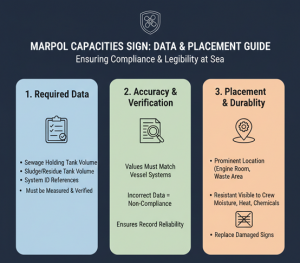
Important Capacities Informations.
The sign usually shows tank volumes and system names. Before being displayed, these values must be measured and verified.
Key elements often include
- Capacity of sewage holding tank.
- Capacity of Sludge or Residue Tank
- System identification references
- Well-defined units of measurement.
Everything must be accurate. If there was no violation with the discharge, the incorrect values are a noncompliance.
Positioning and Availability.
Places where you can find it include engine rooms or waste processing areas. Above all, the substance must resist wetness, heat, and cleansing compounds. Signs that have faded or have been damaged should be replaced immediately.
Marpol sign of capacities compared to other
Multiple compliance signs often carried by vessels. Although they are all in some way connected to pollution control, each has its own regulatory purpose.
The system limitations are marked within the following Marol sign that deals with the capacities. United, they lay down a thorough compliance framework.
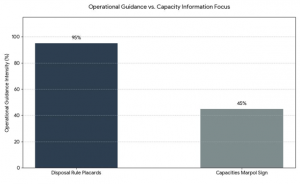
- According to international law, Instructions for waste disposal (Placards) rank the highest (95) on the operational guidance. It provides specific instructions on how and use waste disposal.
- The Vessel Capacities Marpol Sign (45%) is a data reference, providing information about the physical stowage and volume Port capacity of the craft with no procedural steps.
- One tells the crew what the rules are, which is at a controlling point. The other tells you if the vessel has the physical room to follow the rules, which is at a responding point.
Choosing the Appropriate Nutritional Capacities Marpol Sign
Choosing the right sign takes bookkeeping and vessel specifications and regulatory expectations into account. If a generic sign is not specific, it may fail inspection.
First ensure capacity for waste system. When required, use vessel plans or qualified measurements. Don’t Use Estimate.
Choose a sign that is durable and easy to read. Marine-grade materials don’t rust or fade. Fonts are clear and readable.
Include selection tips that are practical
- The capacities displayed will match the systems intended.
- Select materials that are appropriate for the sea environment.
- Check if layout meets standards.
- Change signs following system changes.
It is important to update the sign after system changes. A modified tank that does not contain updated signing can create compliance issues.
The Significance of Capacities Marpol Sign
A Marpol Sign for capacity reference is a useful wayfinding tool. It is a useful tool that helps with environmental protection, crew awareness and inspection readiness.
The sign prevents pollution and operational issues by clearly displaying waste system capacities. Capacities Marpol Sign: Essential for Vessel Compliance a vessel’s compliance and responsible operation will also be demonstrated.
Knowledge of what the sign is requesting, where it lives and how to keep it accurate will protect the vessel and environment. Owners and operators benefit greatly by making a small investment towards proper signage.
Having a Capacities Marpol Sign that is up to date or current ensures easier inspections, safety and confidence.
