

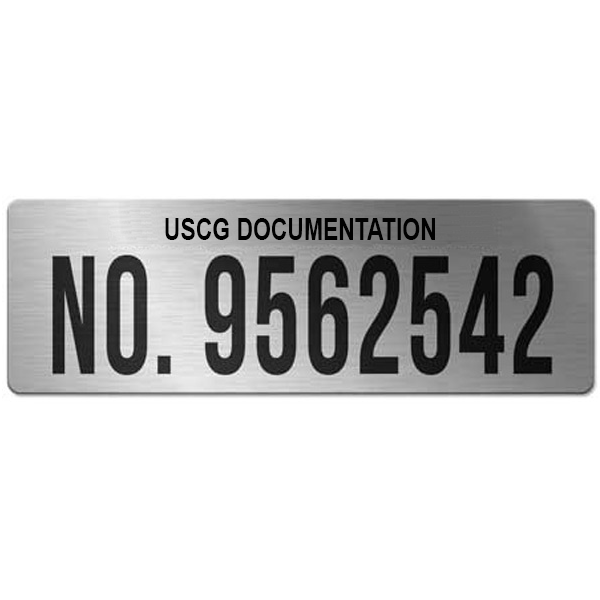
The Stainless Steel Placard is recommended for use in marine, industrial or any environment where it could be exposed to severe conditions. It will not degrade in water, salt or direct exposure to the sun and remains functional for years.
Unlike plastic or vinyl placards, stainless steel placards do not suffer from legibility, or fading and cracking. On ships, they are often used to display USCG documentation numbers or safety information; they are often used in industry for permanent identification, compliance or operation placards.
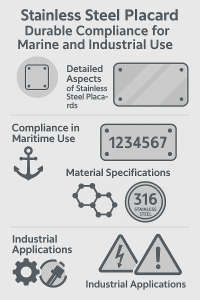
Understanding Stainless Steel Placards
A Stainless Steel Placard is an engraved or etched plate made of marine-grade stainless steel. The placard is as a professional, permanent method of displaying important information.
Key Features
The engraving or etching has easy readability for viewers.
- Durability: It resists corrosion. It resists UV degradation. It resists weather damage.
- Compliance: Meets United States Coast Guard’s vessel identification requirements.
- Versatile: could be used for marine and industrial applications.
Features of Stainless Steel Placards
| Feature | Description | Benefit |
|---|---|---|
| Corrosion Resistance | Marine-grade stainless steel | Long lifespan in saltwater environments |
| Permanant Engraving | Etched or laser-cut markings | Prevents fading over time |
| Compliance Ready | Meets Coast Guard marking requirements | Ensures vessel legality |
| Professional Finish | Polished or brushed finish | Enhances vessel or industrial appearance |
Stainless steel placards are durable and meet regulations.
Detailed Aspects of Stainless Steel Placards
In addition to appearance, the placards were designed for heavy use.
Compliance in Maritime Use
Official numbers, required for vessels over five net tons, are permanently displayed in tamper-proof and in weather-resistant stainless steel meeting Coast Guard durability standards.
Material Specifications
The most typical choice resists pitting, rusting, and corrosion. Marine-grade 316 stainless steel does this within a high-salt environment.
Industrial Applications
Stainless Steel Placards are used for machine identification and compliance labels, safety and warning labels. Their durability and heat resistance make them suitable for high traffic and/or high-heat locations.
Because of the reliability of stainless steel, it is preferred over temporary materials.
Stainless Steel vs. Other Placard Materials
While many placard options exist, stainless steel offers unique advantages.
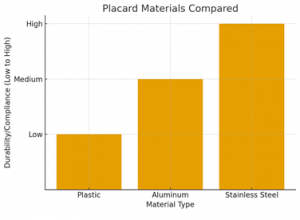
Comparative Strengths
- Plastic Placards: They have a low cost. They fade and crack.
- Aluminum Placards: They are lightweight and durable. They are not as corrosion resistant.
- Stainless Steel Placards: A strong option that resists weather.
Choosing the right placard will give you years of professional representation
By paying attention to material selection and maintenance, stainless steel’s intrinsic strength can be improved.
Tips for Owners
- Marine-Grade Steel: Utilize solely 316 stainless in saltwater environments.
- Check Compliance Specs: Ensure it follows Coast Guard size and placement rules.
- Regular inspections check mountings for visibility during checkups.
- Clean with non-abrasive cleaners occasionally to maintain legibility and appearance.
This keeps placards compliant, easy to read, and visually professional for years.
The Value of Stainless Steel Placards
At Vessel Placards, a Stainless Steel Placard invests into safety, complies regarding professionalism. Stainless resists corrosion. It engraves permanently. Also, It looks much more professional compared to plastic placards or aluminum placards. It makes the right choice.
For vessel owners, stainless steel meets Coast Guard marker identification requirements under law; for industry users, it offers reliable, identifiable marking in harsh environments. Choosing the correct stainless steel placard can offer long-lasting professional integrity for years.
