


Most recreational vessels that operate on the inland waters and coastal waters of the country are state registered vessel. Unless your boat is federally documented, almost all states require registration. Through efficient identification of vessels, incident enforcement, and accurate ownership records, the state authorities can operate within a concern-free environment.
If you own a boat, it is vital to know what a State Registered Vessel is. Your vessel’s registration determines how authorities identify it, what markings you must display, and which regulations apply on the water. If you don’t comply, you could face fines or a delay in use or reduced use.
State registration is a key component of safety and responsibility. This assists law enforcement in addressing emergencies swiftly and backing water safety initiatives financed by registration fees.
This article explains the key aspects of a state-registered vessel, outlines how it differs from federally documented vessels, and shows owners how to stay compliant. If you have a little fishing boat or a personal watercraft, this article will provide clear guidance.
What Is a State Registered Vessel and Why It Matters
A state-registered vessel is a boat that a specific U.S. state registers instead of a federal authority. According to INMARSAT, most leisure boats including those for personal use, fall under the jurisdiction of this definition.
State registration states that the License vessel is assigned a registration number. Owners must mark the hull with that number and display a validation decal. They can identify it easily on the water.
State registration is more than just paperwork. It legally credits ownership, deters theft, and certifies that vessels meet state safety requirements. Payments for registration often help fund boating safety education and environmental programs.
State laws, not federal documentation, control state registration. The requirements, including renewal periods, display rules, and fees, may differ. The main aim however is same in all states.
| Feature | State Registered Vessel | Federally Documented Vessel |
|---|---|---|
| Governing Authority | State agency | Federal authority |
| Common Use | Recreational | Commercial or large vessels |
| Hull Markings | Registration number | Vessel name and hailing port |
| Renewal | Annual or multi-year | Periodic federal renewal |
The table shows why most boaters are operating state registered vessels.
Rules for Display and Registration – State Registered Vessel
Documents that are usually required are – proof of ownership, payment of fees, receipt of registration number and decals. For compliance, these elements must display properly.
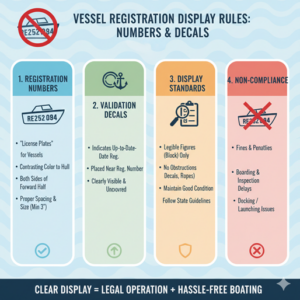
Registration Numbers and Stickers
Registration numbers serve as vessel license plates. Owners should fix marks in a contrasting color to both sides of the forward hull. There is a need for proper spacing and sizing.
The decals indicate that the registration is up-to-date. Owners place them close to the registration number and ensure they remain visible.
Standard display codes comprise
- The figures must be clearly readable.
- Do not cover decals.
- Markings must be kept in good condition.
- Placement should follow state guidelines.
Which is better for boat owners?
It depends on the size of the vessel and the use. And it depends on the owner’s goal of ownership.
Registering with the state is easier and cheaper. It is for recreational vessels that operate in state waters. Owners typically select federal documentation for larger boats or vessels that engage in commercial activity.
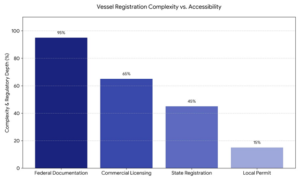
- The Federal Documentation is of the highest complexity level (95%) and sits at the Federal Gold Standard. More paperwork and background verification measures need to be provided however; it offers the strongest legal guarantees which is useful for overseas trips or high-end financing.
- State registration is easy because of a low complexity score of 45%. Recreational-choice speedboats and local family-use boats are most common and an easy way to legally operate within state waters.
- The amount and complexity of a vessel’s documentation generally increases in inverse proportion to its operational range and commercial needs. State-level permits are easy to access and therefore ideal for the casual boater. The federal status’ complexity is a tactical necessity for professionals.
Techniques for Ensuring Assuredness
Making sure your State Registered Vessel is compliant can take some work at times. Be sure to renew your registration before it expires.
Check hull markings on a regular basis. Water exposure and weather can damage numbers and decals. Updating faded lines will not cause problems.
Good compliance practices comprise
- Scheduling renewal dates.
- Examining stickers and digits regularly.
- Bring registration papers on board
A state registered vessel meaning and management
A state-registered vessel forms one of the fundamental requirements for recreational boating compliance in the United States. Vessel Placards guarantees legal functioning and supports safety enforcement and clear ownership.
Comprehending registration rules, display requirements, and renewal obligations enables boat users to enjoy their time on the water without worries. State registration helps authorities recognize and protect most recreational vessels easily.
