

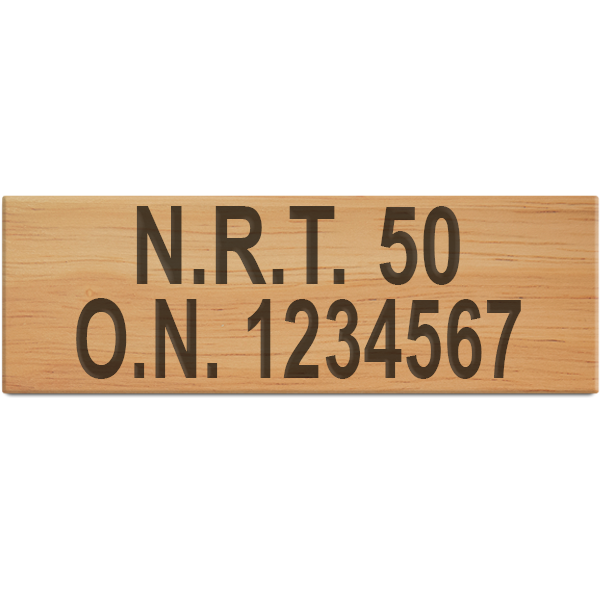
Every Canadian vessel is required to fly a plaque representing the vessel’s legal registration and identity. Other methods exist, but no material lasts longer or is more appropriate than the customary Hardwood Placard, the most durable, advanced, and established choice in plaque materials. The wooden plaques are not just for compliance purposes but also a source of craftsmanship and pride for the vessel owners.
The Hardwood Placard is the official vessel identification plate which is fitted to the vessel and details the name of the vessel, port of registry and the official number of the vessel. The Hardwood Placard meets the requirements for vessels registered with Transport Canada under the Canada Shipping Act in Canada and is made from solid, high-quality hardwood, which affords your placard style and durability to withstand the rigors of the marine environment.
Understanding the Purpose and Importance of a Hardwood Placard
A hardwood placard is a wood plaque that displays the registration information permanently. A decorative and regulatory item, it is designed both to improve the aesthetics of the boat and meet federal placard requirements.
| Aspect | Description | Details / Notes |
|---|---|---|
| Purpose | To display vessel registration details as required by Transport Canada | Serves as an official identification requirement for vessels |
| Material | High-quality hardwood (maple, oak, or mahogany) | Chosen for durability and classic aesthetic appeal |
| Display Information | Vessel name, official number, and port of registry | Engraved or carved for permanent visibility |
| Location | Mounted inside the main cabin or wheelhouse | Must be clearly visible and securely fixed |
According to Transport Canada Marine Safety and Security Directorate regulations, Canadian registered vessels must have placards clearly marked on them to ease inspection.
Why Choose Hardwood
Hardwood is sought after due to natural water resistance, the ability for it to be engraved/marked more clearly, and the aesthetic of an expensive hardwood finish a registered vessel typically has. Unlike plastics or metals, hardwood can be left in its natural finish giving a customary wood look desired for interior of classic yachts/sailboats.
Legal Compliance
In order to comply with regulations, all Canadian vessels must display a registration plaque with information that is permanent, accurate, and visible. The Hardwood Placard allows vessel information to be visibly compliant at all times, for inspection, sale, or transfer of ownership.
Design, Features and Customization Options
The Placards are built to meet regulatory standards and can be customized for different types of vessels.
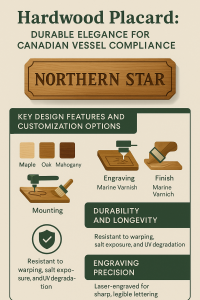
You can add a wide variety of features to the vessel placards. These include the choice of maple, oak or mahogany for the board. These woods are all sturdy and each has its own texture. A laser process creates deep, readable engraving that lasts for years. A UV-protected marine varnish finish protects the wood of the model from weather and the sun. Screws or adhesive can affix the model to the mounting surface based on preference.
Durability and Longevity
Hardwood stands stable against humidity and temperature changes, and it resists salt and UV damage with one applying a marine-grade finish, which makes it suitable for use both indoors and outdoors in semi-exposed locations.
Engraving Precision
Laser-engraving creates letters that are crisp and articulate on each Hardwood Placard. The letters are therefore easily read in the harshest marine conditions.
Aesthetic Options
Plaque owners can choose the finish and font for their placard, and most select a style that reflects traditional nautical lettering.
Hardwood Placard vs. Other Materials
Hardwood is a common material choice for vessel plaques. Aluminum and brass are other materials used as detailed below.
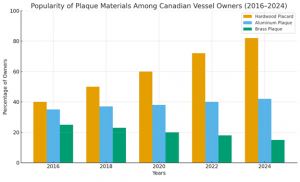
- Wood placards gained popularity. Owners prefer the natural look and sustainability. Wood placards account for over 80% of sales.
- Aluminum plaques remain in moderate use, and many owners appreciate them for their low weight and durability.
- Brass plaques appear much less frequently in comparison, likely because they are more expensive and less durable.
This upward trend suggests demand increased for eco-friendly, visually pleasing options that still meet Transport Canada regulations.
Steps to Order and Install a Hardwood Placard
With an easy process, the addition of a Hardwood Placard to your vessel will not only maintain compliance but look beautiful.
Confirm Vessel Registration Details
Always check your vessel’s official name, port of registry and registration number with Transport Canada to avoid non-compliance due to errors in markings (e.g. engraving).
Choose Material and Design
- Choose wood and finish that compliment your ship’s interior. Common choices include:
- Maple: Light and elegant.
- Oak: Customary and sturdy.
- Mahogany: Warm, customary appearance.
Submit Accurate Information
Include all the engraving details.
- Ship name (exact name).
- Official number (assigned by Transport Canada)
Port of registry
Preparing a port of registry plaque requires you to verify several details—such as reviewing all documentation—before you engrave the information on the plaque. The next step is to select the type of wood for matching to the look and durability of the boat. Submit the requested information for engraving, approve the proof, and check the design or spelling for mistakes before printing.
Review and Approve Design Proof
Confirm that everything is correct on the digital proof from the manufacturer before engraving starts.
Install the Placard
Affix your plaque with stainless-steel screws or marine-grade adhesive in an open area like the main cabin or the cockpit.
Maintenance and Care for Hardwood Placards
Hardwood Placards are durable. Care instructions can prolong the lifespan of Hardwood Placards.
- Clean in intervals. Wipe with soft cloth using mild soap, and water. Avoid abrasive cleaners.
- Polish once a year. Use marine-grade polish or wood conditioner for protection of the finish.
- Inspect for Damage: Look around on the device to find signs of fading, scratches, or loose mounting screws.
- Avoid Direct Sunlight: Do not position it under direct sunlight for preservation of the color and finish.
Your plaque will last for years and look great with proper maintenance.
Enhancing Vessel Aesthetics with a Hardwood Placard
A yacht owner in Halifax replaced the metal placard identifying his yacht with a Hardwood Placard made of mahogany. The result was not just functional but also beautiful, with the rich brown color of the placard blending with the yacht’s interior design. The placard met Transport Canada regulations.
The inspection team observed that the engraving was clearly visible and the plaque was sturdy enough to be an acceptable legal option, showing that hardwood is a legal option that presents the vessel in a positive light.
Common Mistakes to Avoid When Ordering Hardwood Placard
Even small oversights can result in delays or noncompliance. Avoid these common mistakes:
| Mistake | Impact | Solution |
|---|---|---|
| Incorrect spelling of vessel name | Invalidates plaque | Double-check registration details before engraving |
| Wrong port of registry | Noncompliance | Verify with Transport Canada prior to finalization |
| Poor-quality wood | Short lifespan | Choose durable, marine-grade hardwood |
| Inadequate sealant | Water damage | Ensure UV and moisture protection coatings are applied |
Double-check details for avoiding expensive replacements and ensuring compliance with building regulations, and use good quality products.
Practical Tips for Choosing the Right Hardwood Placard
Pick a wood color with a grain that fits the cabin’s style for the boat’s inside space.
- Choose Durable Woods: Select woods like mahogany. These woods resist saltwater. These woods have natural humidity resistance.
- Verify Engraving Depth: Make it readable after years of exposure to the elements outside.
- Request Protective Coating: Ensure UV protection with varnish sealant.
Tips and Benefit of Hardwood Placard
- Hardwood suited for humidity: longevity, durability.
- You must confirm Transport Canada compliance, or you may face penalties.
- Review engraving proof: Prevents rework
- Maintain annually: Preserves condition
These points will ensure that your plaque is legal and will improve the appearance and professionalism of your boat.
The Timeless Value of Hardwood Placard
Vessel Placard represents more than a regulatory necessity—it embodies maritime However, the Hardwood Placard is not simply a form-filling exercise. For Canadian vessel owners it has come to reflect the customary values of fine craftsmanship and good design.
Although most vessel components now use synthetic materials, many owners still prefer a non-consumable hardwood plaque because it lasts for years, requires minimal maintenance, and offers a decorative look. When owners keep the plaque updated with accurate registration information, it also reflects proper maritime compliance and a sense of pride.
